Construction Work in Europe: The Ultimate 2026 Career Guide for Sri Lankans
Construction work in Europe has become one of the most reliable options for hard-working Sri Lankans with technical abilities to become financially free by April 2026. European countries are spending billions on new roads, homes, and factories, but they don’t have enough local builders to do the work. This has opened a golden door for Asian workers to get well-paying jobs in places like Romania, Poland, Lithuania, and Croatia.
The European construction industry offers a level of employment security and pay that is hard to find anywhere else, whether you are a skilled Mason, an industrial Welder, or a General Laborer. In this exclusive for dailyvelai.com, we tell you all you need to know to get a job in Europe this year.
1. Why is construction work in Europe so busy in 2026?
The construction industry in Europe is now in a “Super Cycle.” Because there aren’t enough workers in the country, governments are speeding up the process of getting visas for foreign workers.
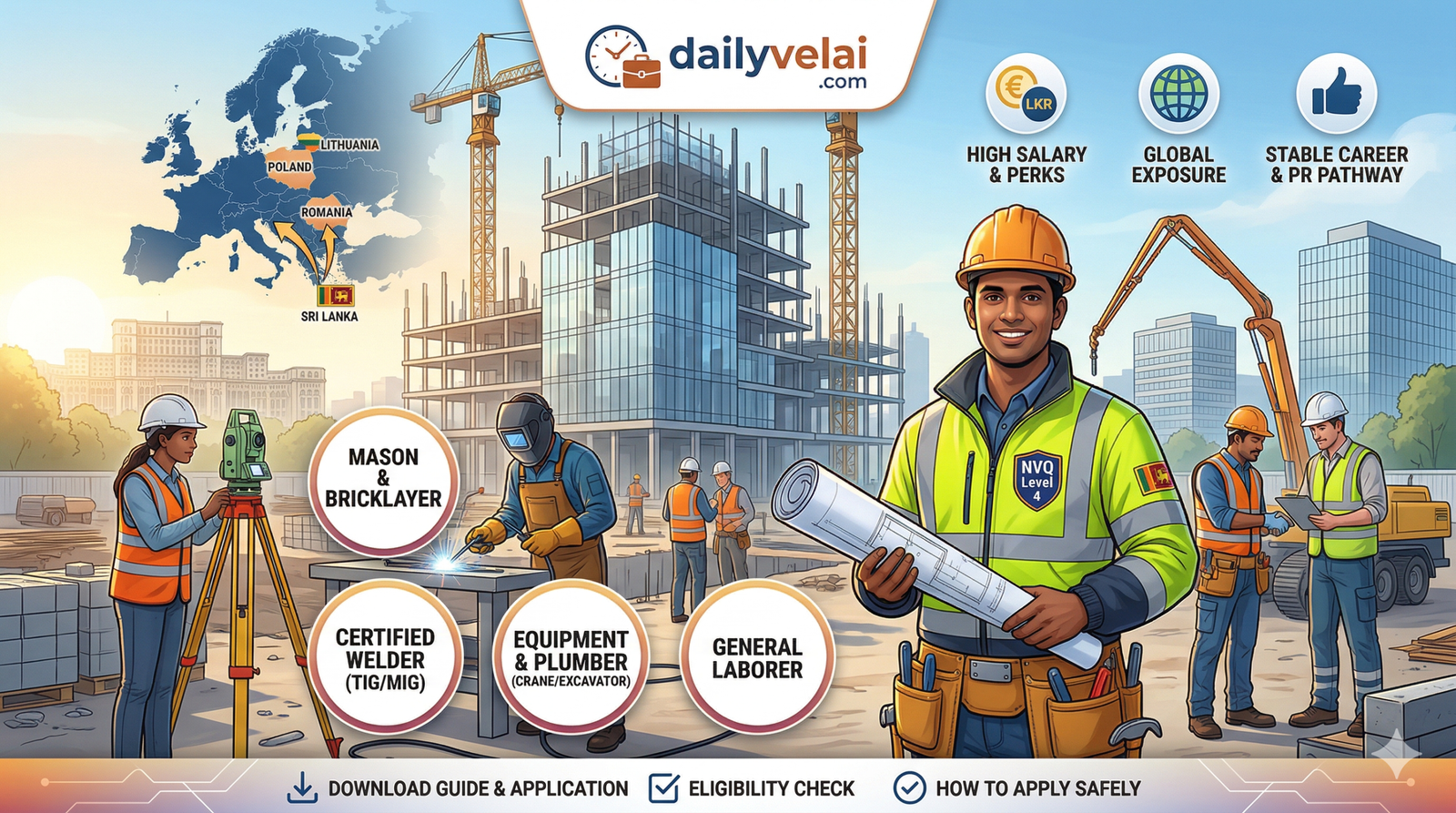
High-Demand Areas: Eastern European countries are at the top of the list, giving construction workers faster visa processing.
The Currency Advantage: If you earn in Euros (EUR) or Polish Złoty (PLN), you can get a great exchange rate against the Sri Lankan Rupee (LKR), which means you can save a lot of money for your family back home.
Simplified Visas: A lot of nations have made it easier to get a visa for “Shortage Occupations,” which includes practically all construction jobs.
2. The Most In-Demand Construction Jobs in 2026
If you have worked in any of the following types of construction in Europe, your chances of being chosen are very high:
A. Masons and tile setters
Romania and Croatia are now creating huge housing complexes. There are a lot of jobs for masons who can deal with current brickwork and tile-fixing methods.
B. Welders in factories (TIG/MIG)
Heavy industrial construction is centered in Poland and Lithuania. One of the best-paid blue-collar jobs is for certified welders who know how to work with structural steel.
C. Operators of Heavy Equipment
Large infrastructure projects need experienced drivers for backhoes, tower cranes, and excavators. Having a legitimate license that is recognized in Europe or throughout the world is a big benefit.
3. Salary Guide for Construction Work (April 2026)
Here is what you can expect to earn per month (estimates in LKR based on current exchange rates):
| Job Role | Top Hiring Country | Avg. Monthly Salary (LKR) |
| Industrial Welder | Poland | Rs. 480,000 – 680,000 |
| Mason / Bricklayer | Romania | Rs. 380,000 – 520,000 |
| Electrician / Plumber | Lithuania | Rs. 420,000 – 600,000 |
| General Construction Laborer | Croatia | Rs. 300,000 – 380,000 |
| Construction Site Foreman | Germany | Rs. 750,000 – 1,000,000+ |
4. Necessary Qualifications and Paperwork
To be able to work in construction in Europe, you need to get ready for the following:
Skills Certification: Workers don’t necessarily need to have one, but possessing an NVQ Level 3 or 4 certificate from Sri Lanka will greatly raise your chances of getting a job and a visa.
Work Experience: You need letters from past employers that prove you have worked for them for at least two years.
You don’t have to be an expert in English, but you do need to be able to read and understand safety regulations and basic site communication in English.
Health: Construction work is hard on the body. You have to pass a regular “Fit for Work” medical exam.
Would you like to work in the busy building trade in Europe? If you work in Sri Lanka and want to move to another country, 2026 might be your year. This book has everything you need to know, from the changes that are happening in the industry to the things you can do to get the position you want. Let’s speak about how you might turn your desire to work into action on building sites all around Europe.
Why Europe? Building brings up a whole new universe of possibilities.
Europe is still a great place to build new roads, repair up old ones, and work on big green building projects. Germany, the Netherlands, and Sweden are investing a lot of money to make their airports, highways, homes, and energy systems more modern. This means that the need for skilled and semi-skilled construction workers is steady and expanding.
People from Sri Lanka are drawn to the country because they can get good pay and work in an industry that encourages safety and good work. They can also gain experience in other nations. Also, many European countries have rules that permit foreign workers come to work. This makes the idea more real than before.
What Employers Want You to Know
People with a lot of varied skills can work in construction, however some skills really do help you get a job:
There are still a lot of work for plumbers, electricians, masons, and carpenters.
Technical know-how: If you know how to utilize modern equipment, generate digital designs, and observe safety guidelines, you’ll stand out.
Language basics: You should know English, and it can help to know German or Dutch, depending on where you are.
Being on time, working hard, and getting along with people are all examples of soft talents.
Putting in the time to take training or certification courses before applying can actually help. You need to know how to construct and how to trust.
How to Get Started: Useful Advice for the Future
There are a lot of procedures you need to take to get a job in Europe’s construction business. Here is a plan to help you get there:
Find out what the rules are for visas and work permits in the country you want to visit. Because every country has its unique rules, you should look at the official government websites first.
Contact trustworthy staffing agencies: Pick well-known organizations that help Sri Lankans get jobs in the construction industry in Europe.
Get actual certifications: Taking classes in occupational safety or other recognized technical skills will help you stand out.
Put your papers in order. This includes a clear CV, references, and any translations of your certificates that you need.
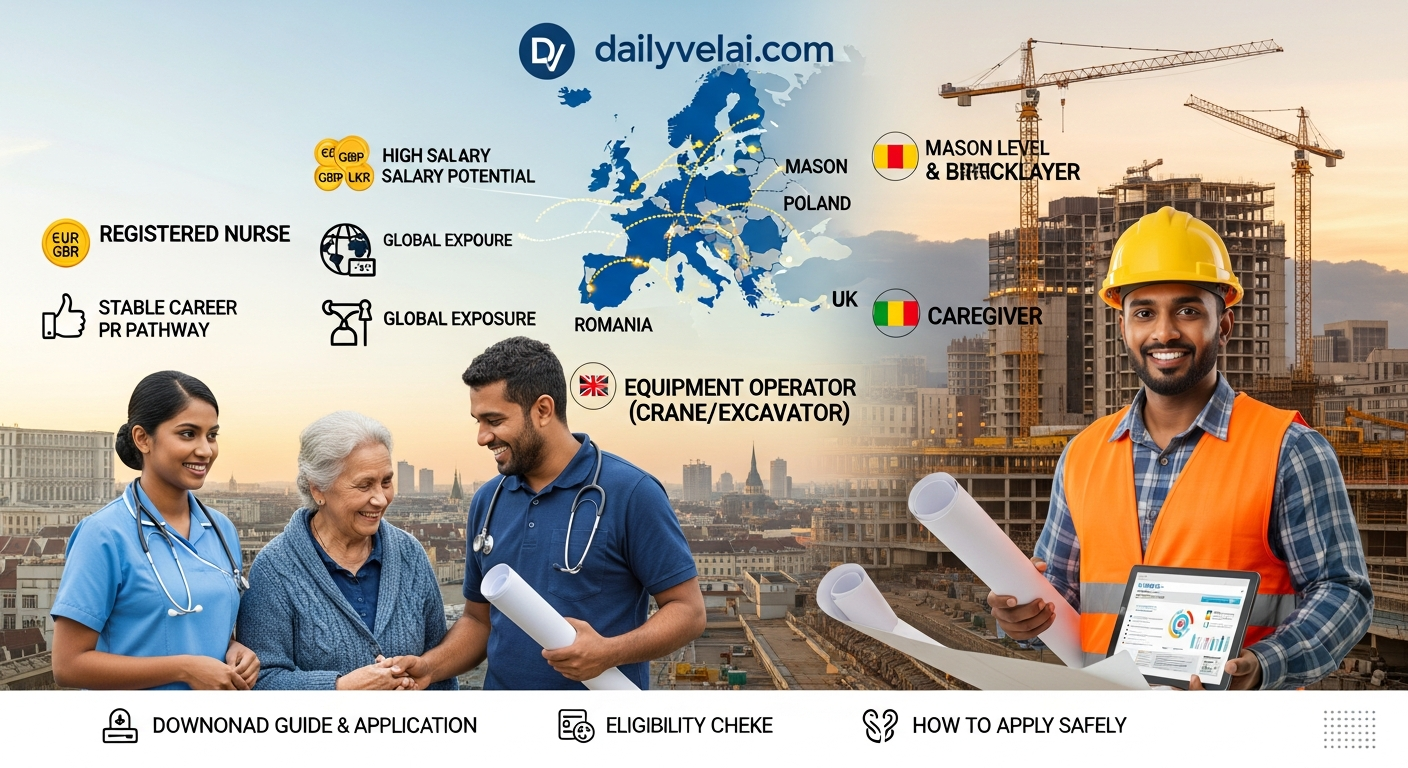
Consider being ready with language. If you could merely have a simple conversation, things would be easier and you would be able to find work.
Keep in mind that being ready and being patient are two sides of the same coin. Every small action you do gets you closer to a new and exciting chapter.
What will happen next in Europe’s construction industry? Bright Horizons
Even if it won’t happen right now, Europe is spending a lot of money on building that is healthy for the environment and uses technology. The business is evolving quickly, which opens up new areas where people can specialize and achieve well, such smart buildings and projects that use renewable energy.
If Sri Lankans want to perform well, they need to be open-minded and willing to learn new ideas. You could start out as a skilled worker today and move on to a supervisory or technical role tomorrow. There are a lot of options.
If you want to reach your goal by 2026, you need to start making plans now.
In short
In 2026, there will be a lot of interesting employment in the construction business in Europe for Sri Lankan workers who are eager to do more than just build things. It’s all about making the future better. If you need help, don’t be afraid to ask someone who has been through this before. Be ready and interested. You and your spouse will have to do more than just fill out forms and get permits. You will also have to get adjusted to a new way of living.
Next week, we’ll look at the profiles of a few countries and talk about what it’s like to live and work in Germany, the Netherlands, and Sweden. Until then, let’s hope that hard hats lead to bright futures!
How to Apply From Sri Lanka: A Step-by-Step Guide
It could seem hard to begin started, but you can accomplish it one meaningful step at a time:
Find out which European countries have construction jobs that are a good fit for your skills. Germany’s “Skilled Immigration Act,” for instance, has made it easier for construction workers to get visas.
Get your documents ready: This normally means having a valid passport, proof of expertise in building trades, and sometimes proof of language skills (English or the local language). If you haven’t already, think about earning the right qualifications to get better at what you do. It will be worth it.
Find job sites or recruitment organizations that you can trust. Some of these groups help Sri Lankan workers get jobs with corporations in Europe. Always make sure that they are legitimate to avoid scams. The European Job Mobility Portal (EURES) and other government websites are great ways to find information.
Fill out an application and attend to interviews. These days, many businesses do interviews online. Be ready to talk about how you feel and what you’ve been through. Knowing a little bit of the local language can make a big difference here.
Get a job offer and then apply for a visa to work. You or your firm can start the immigration procedure after you acquire a formal offer. Each country has its own rules, so be sure to read them thoroughly and give yourself additional time to fill out the forms.
Plan your relocation: Before you move, it’s a good idea to get in touch with Sri Lankan communities or support groups in your new city, in addition to things like flights and housing. They offer you with moral support and useful advice.
What to Expect When You Get There and After
When you get to Europe to work on a construction project, it’s the start of a journey in more than one way. The working conditions are substantially different from those in less formal contexts, where they are often safe and well-regulated. You might expect regular hours, social benefits, and maybe even the possibility to take classes. On the other hand, it could be challenging to get used to a new culture and the weather, therefore it’s really helpful to keep an open mind and a pleasant attitude.
Don’t forget to look around. You may make this vacation more than just work by spending weekends exploring old towns or visiting to local festivals. You can also make your life better.
Bringing It All Together
Moving to Europe to work on construction isn’t just a job change; it’s a significant move that comes with a lot of opportunities and some problems. But you can get through them if you prepare and are determined. Make sure you know what you want to do, have the right information, and get ready to build not only buildings but also a new life.
Next week, we’ll speak about how to get along with your coworkers in Europe and how to balance your job and personal life while you’re there. Until then, take care of yourself and keep dreaming big. You’re not just putting up buildings; you’re making your future.